
Bayer Prize awarded to Zsuzsanna Elekes
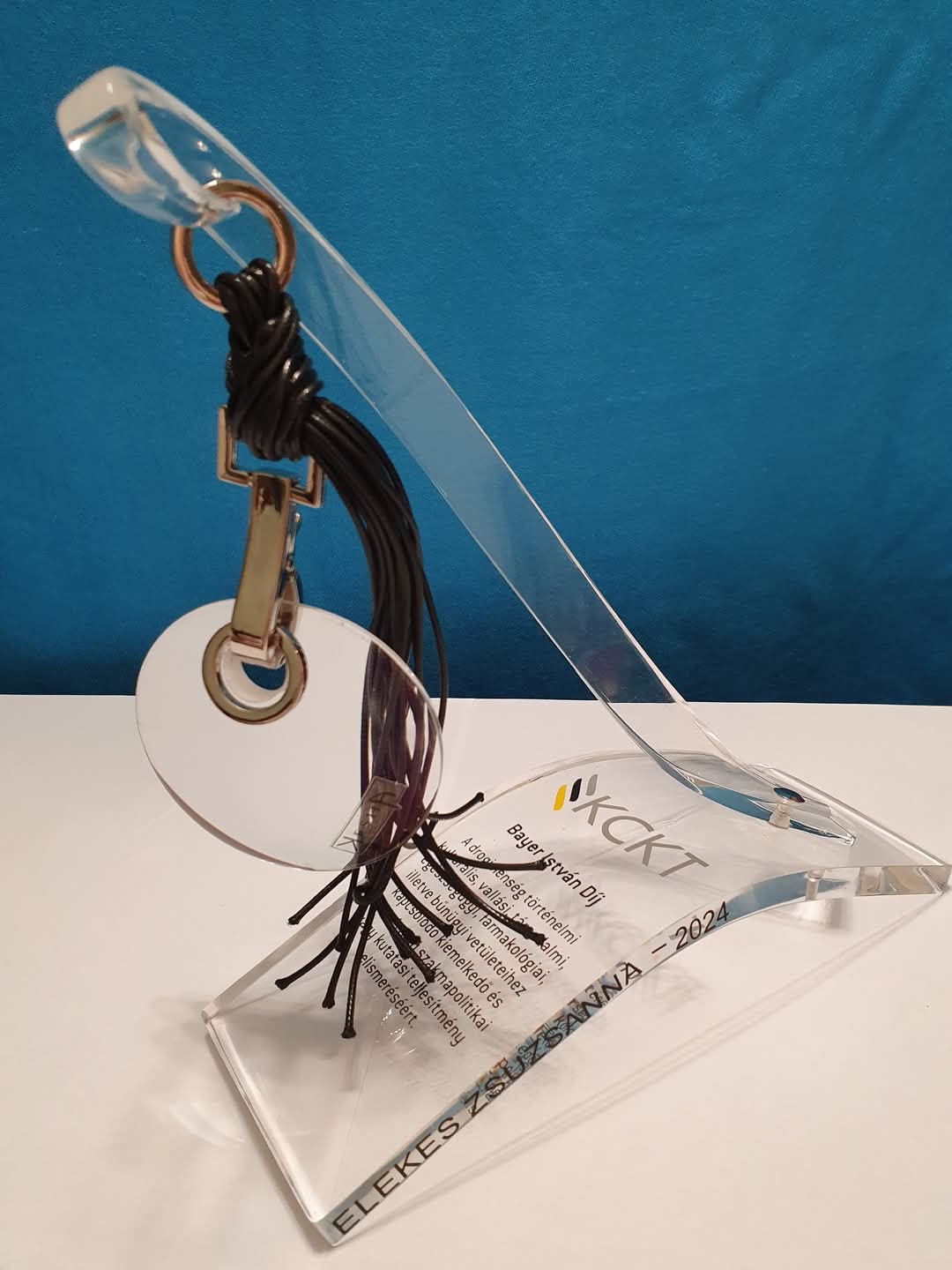 At the XIV National Congress of the Hungarian Association on Addictions Society János
Szemelyácz, President of MAT, presented the István Bayer Prize to Zsuzsa Elekes. The MAT
Board awards the Bayer Prize every two years in recognition of the achievements of a
Hungarian expert who has significantly contributed to the drug phenomenon. The prize
honours the memory of Professor István Bayer (1923-2016), an internationally recognised
authority on Hungarian pharmacology and drug control research.
At the XIV National Congress of the Hungarian Association on Addictions Society János
Szemelyácz, President of MAT, presented the István Bayer Prize to Zsuzsa Elekes. The MAT
Board awards the Bayer Prize every two years in recognition of the achievements of a
Hungarian expert who has significantly contributed to the drug phenomenon. The prize
honours the memory of Professor István Bayer (1923-2016), an internationally recognised
authority on Hungarian pharmacology and drug control research.
National Congress of Hungarian Association on Addictions (MAT)
 The XIV National Congress of MAT took place between 14-16 November 2024, where the
Research Group presented several papers. Zsuzsa Elekes presented the preliminary results
of the latest ESPAD 2024 data collection. Petra Arnold presented research on the problem
perception of drug-specific care providers and client needs, which underpins the Budapest
Drug Strategy. The poster presentation of Petra Arnold, Zsuzsa Elekes and Borbála Paksi on
"Media representation of the drug phenomenon in the last quarter of a century in Hungary"
was also available at the conference.
The XIV National Congress of MAT took place between 14-16 November 2024, where the
Research Group presented several papers. Zsuzsa Elekes presented the preliminary results
of the latest ESPAD 2024 data collection. Petra Arnold presented research on the problem
perception of drug-specific care providers and client needs, which underpins the Budapest
Drug Strategy. The poster presentation of Petra Arnold, Zsuzsa Elekes and Borbála Paksi on
"Media representation of the drug phenomenon in the last quarter of a century in Hungary"
was also available at the conference.
„A drog-jelenség hazai médiareprezentációja az elmúlt közel negyedszázadban”
Risk behaviours, well-being and attitudes in two border sub-regions - Studies in socio.hu
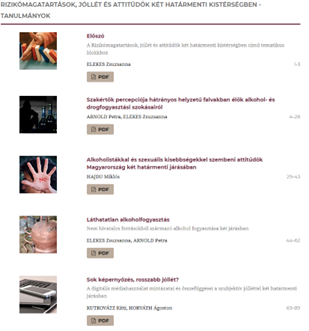 The latest issue of socio.hu published four studies from our research in the districts of Siklós
and Záhony. The studies present findings on unregistered alcohol consumption, screening,
experts’ and general population’s attitudes. The authors are Zsuzsanna Elekes, Petra Arnold,
Miklós Hajdu, Ágoston Horváth and Kitti Kutrovátz. The studies are available
here.
The latest issue of socio.hu published four studies from our research in the districts of Siklós
and Záhony. The studies present findings on unregistered alcohol consumption, screening,
experts’ and general population’s attitudes. The authors are Zsuzsanna Elekes, Petra Arnold,
Miklós Hajdu, Ágoston Horváth and Kitti Kutrovátz. The studies are available
here.
"Difficulties in entering addiction treatment programs in Hungary"; article is published in the journal ESÉLY
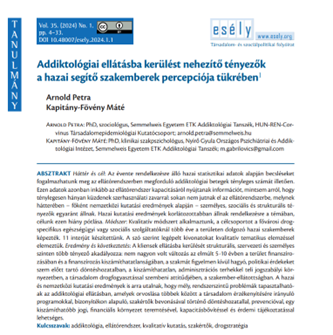 In the latest issue of ESÉLY, Petra Arnold and Máté Kapitány-Fövény published the article "Experts’ perception of difficulties in entering addiction treatment programs in Hungary",
based on the results of the research aimed at establishing the Drug Strategy of Budapest.
Read the full article
here.
In the latest issue of ESÉLY, Petra Arnold and Máté Kapitány-Fövény published the article "Experts’ perception of difficulties in entering addiction treatment programs in Hungary",
based on the results of the research aimed at establishing the Drug Strategy of Budapest.
Read the full article
here.
ESPAD Assembly in Ljubljana
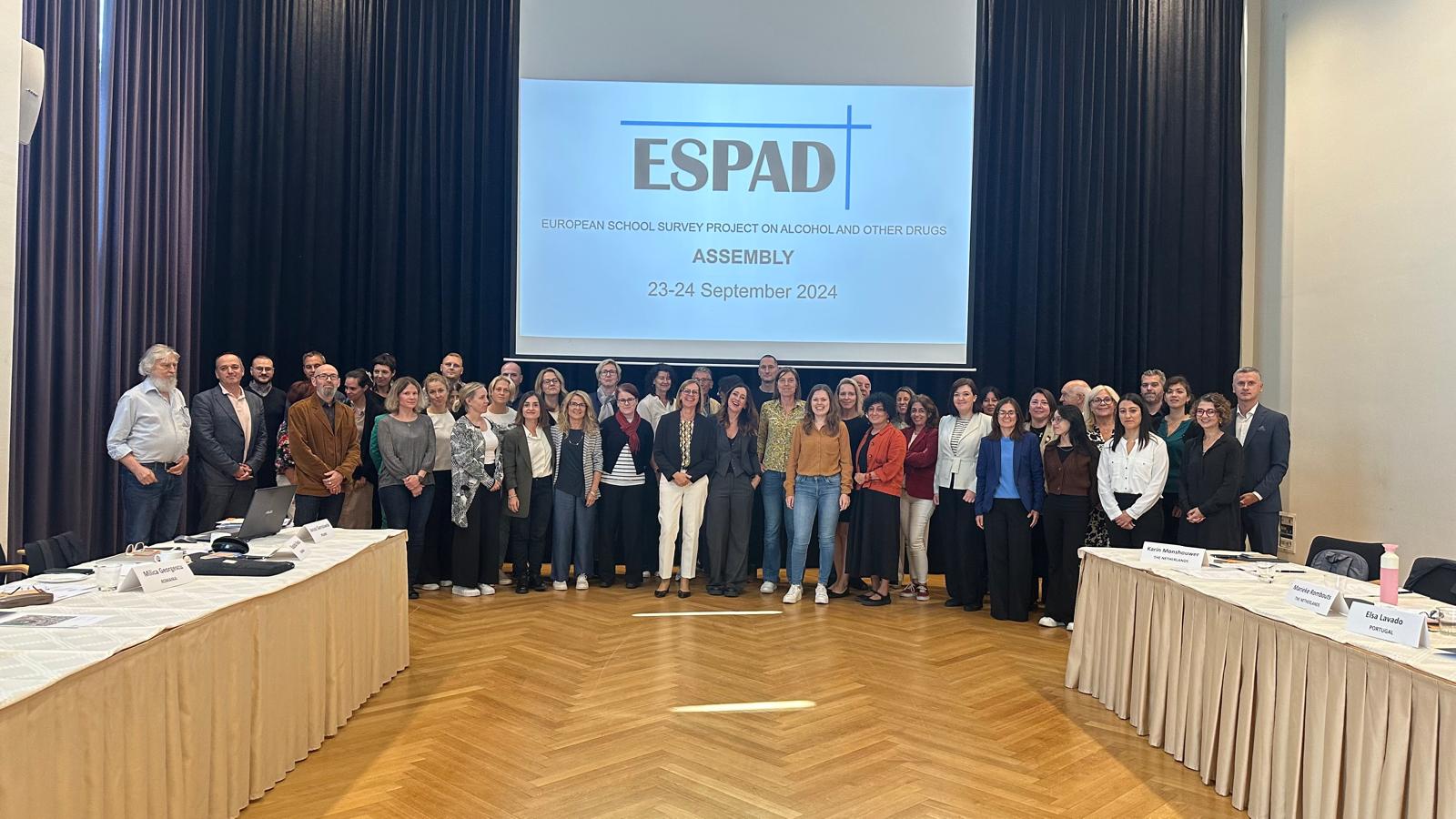 On 23 and 24 September 2024, the ESPAD annual meeting took place in Ljubljana, with representatives from almost all 35 countries present, including Zsuzsanna Elekes and Petra Arnold from Hungary. At the meeting, experts shared their experiences on the 8th data collection wave 2024: all countries presented the data collection process and challenges. Petra Arnold presented the Hungarian data collection.
The results of the research group were presented with a poster at the TiY (European Research Network on Transitions in Youth) workshop
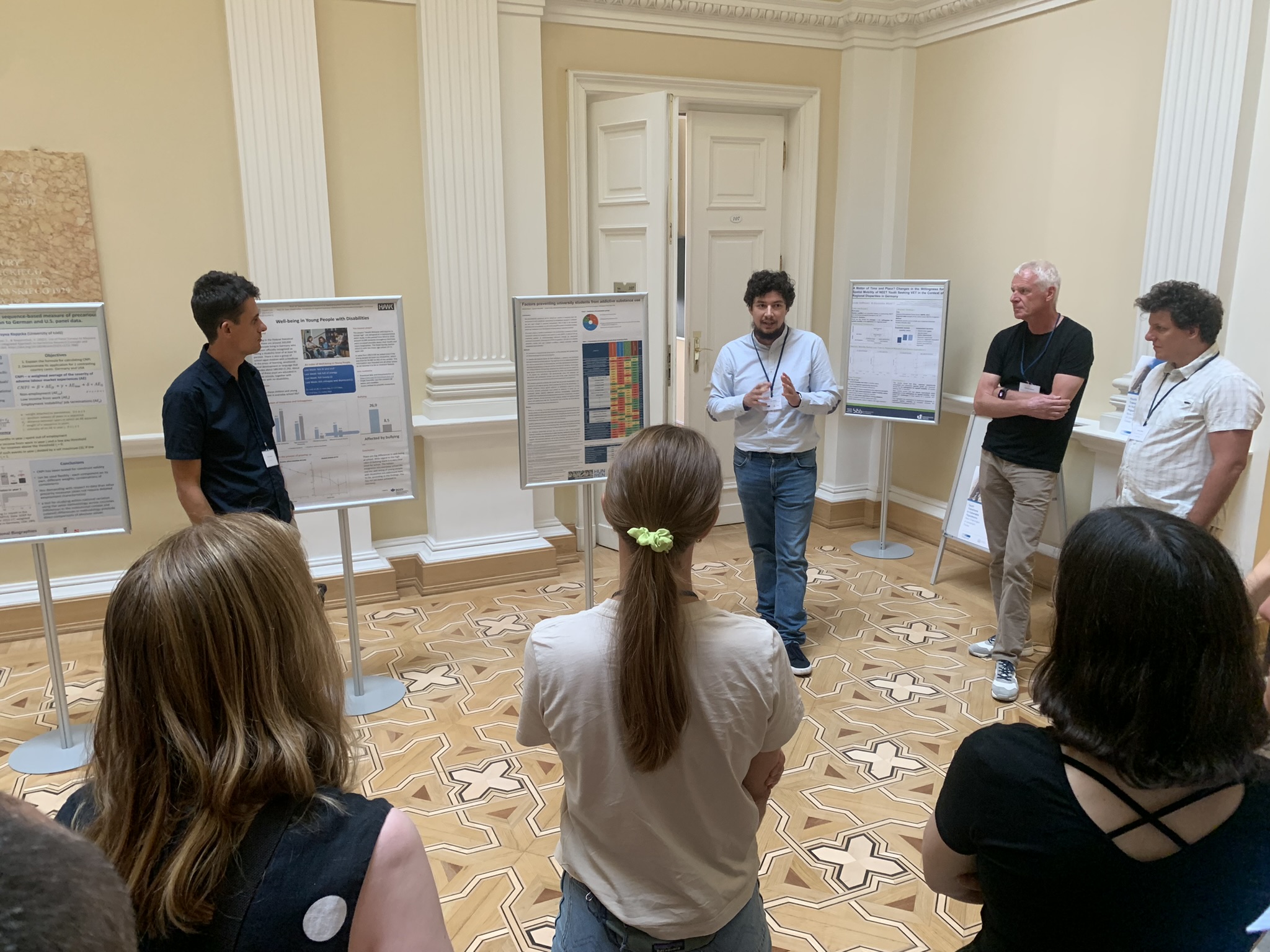 The annual workshop of the TiY (European Research Network on Transitions in Youth) was held in Warsaw between 4 and 6 September 2024, where Miklós Hajdu presented their joint poster with Ágoston Horváth entitled "Factors preventing university students from addictive substance use". The research team grouped university students according to their different substance use habits and behavioural addictions and examined the variables that make a student likely to be classified in the most moderate use group of the typology they developed.
The book entitled ’Alcohol and drug use, leisure time activities, and well-being among university students in Hungary’ is out
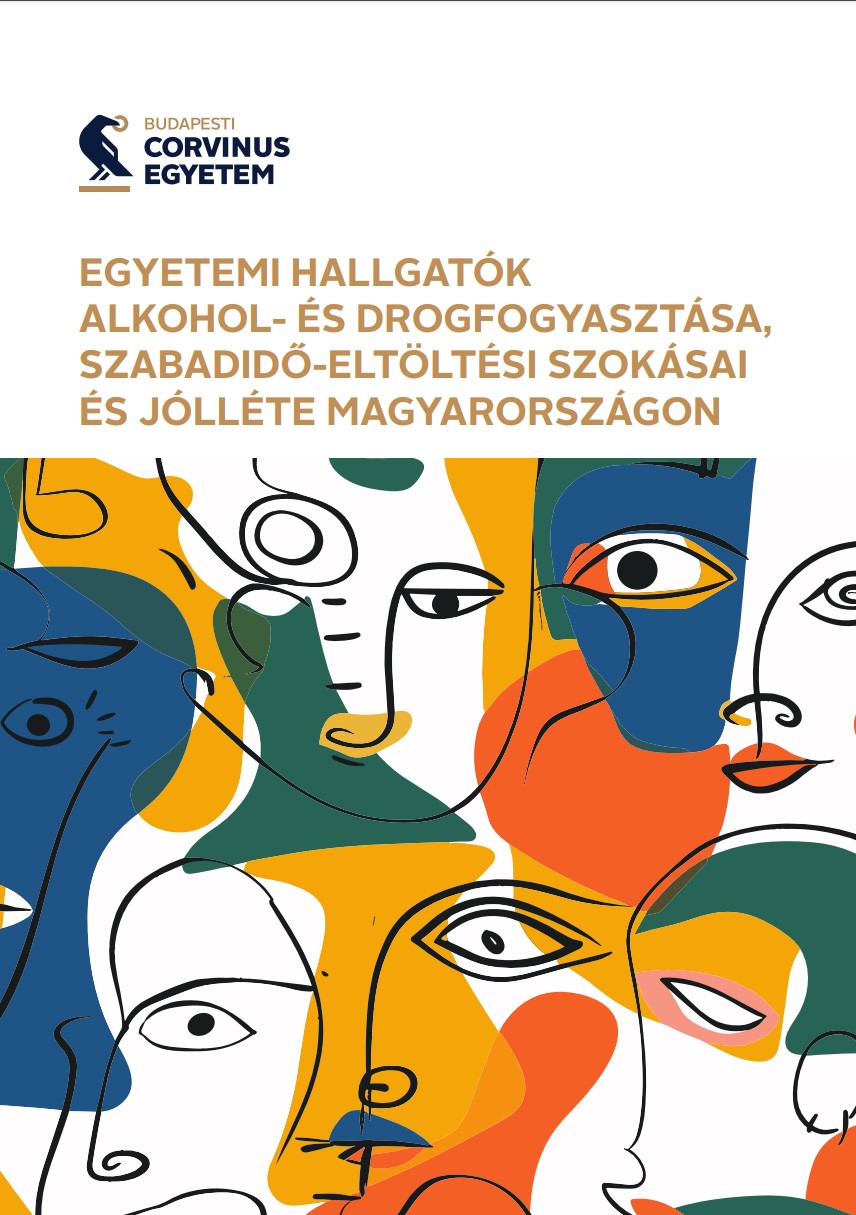 ’Alcohol and drug use, leisure time activities, and well-being among university students in Hungary’ edited by Petra Arnold and Zsuzsanna Elekes has been published by Corvinus University of Budapest. The Research Group’s colleagues contributed to the book. The book presents the results of the survey conducted in 2022 on an online representative sample along the above-mentioned topics. You can download the book here.
Our research project on students was included in the Corvinus Research Week programme
 Following the traditions of previous successful events, Corvinus University of Budapest has organized
its Research Week again. The five-day event offers workshops, research-related training, guest
lectures and more. Our study on university students was also presented during the The Research
Week. Read more here. The results will be available soon in our online publication.
Following the traditions of previous successful events, Corvinus University of Budapest has organized
its Research Week again. The five-day event offers workshops, research-related training, guest
lectures and more. Our study on university students was also presented during the The Research
Week. Read more here. The results will be available soon in our online publication.
Presentation at the “European Consortium for Sociological Research” annual conference
The ECSR’s (European Consortium for Sociological Research) annual conference was held in Prague between the 18-20th September, 2023. Two members of our research group, Ágoston Horváth and Kitti Kutrovátz, gave a presentation titled "The associations of parental monitoring, the leisure of going out and the mental well-being of adolescents in Hungary".
In their analysis, based on ESPAD data, they examined the correlations between various leisure activities, parental monitoring and the well-being of adolescents. They searched for the answer to the question to what extent the declining trend in teenagers' well-being can be explained by changed leisure structures, such as spending more time online and less time going out. They also examined the question whether increasing parental monitoring is a protective factor of adolescents well-being.
ESPAD Regional Seminar in Vienna
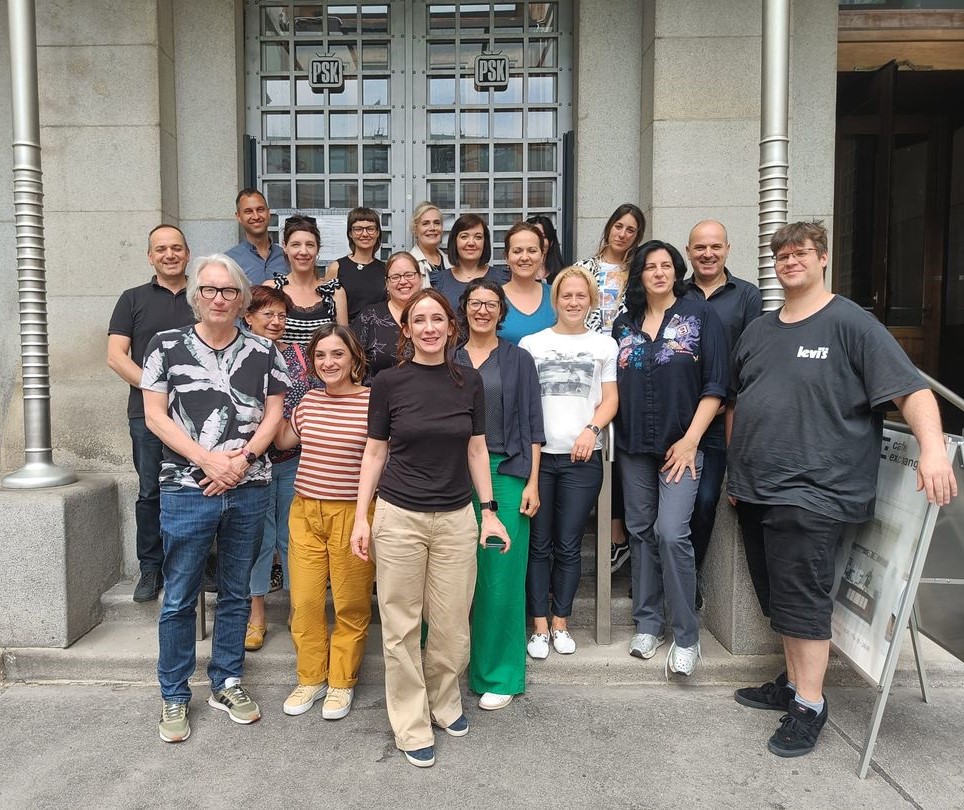 ESPAD Regional Seminar was held in Vienna on the 5-6 th July with the participation of Zsuzsanna Elekes and
Petra Arnold. The most important goal of the seminar was to discuss each country's Project Plan for the
upcoming data collection in 2024 in order to make the data collection process as smooth as we can and yield as
high quality data as possible. The Hungarian Project Plan was presented by Petra Arnold and the discussant of
the Kosovo Project Plan was Zsuzsanna Elekes.
ESPAD Regional Seminar was held in Vienna on the 5-6 th July with the participation of Zsuzsanna Elekes and
Petra Arnold. The most important goal of the seminar was to discuss each country's Project Plan for the
upcoming data collection in 2024 in order to make the data collection process as smooth as we can and yield as
high quality data as possible. The Hungarian Project Plan was presented by Petra Arnold and the discussant of
the Kosovo Project Plan was Zsuzsanna Elekes.
Presentation at the ‘General Population Survey’ expert meeting of EMCDDA
 Petra Arnold gave a presentation on ‘Cognitive testing of a set of questions to measure simultaneous
polydrug use’ in collaboration with ELTE PPK (Faculty of Education and Psychology, Katalin Felvinczi,
Borbála Paksi) and the National Drug Focal Point (Anna Péterfi) at the ‘General Population Survey’
expert online meeting of EMCDDA. The object of the presentation was on one hand to explore the
ways in which respondents interpret the questionnaire on polydrug use; on the other hand, to
present the theoretical framework and the indicators for measuring simultaneous polydrug use in
the next wave of the general population survey.
Petra Arnold gave a presentation on ‘Cognitive testing of a set of questions to measure simultaneous
polydrug use’ in collaboration with ELTE PPK (Faculty of Education and Psychology, Katalin Felvinczi,
Borbála Paksi) and the National Drug Focal Point (Anna Péterfi) at the ‘General Population Survey’
expert online meeting of EMCDDA. The object of the presentation was on one hand to explore the
ways in which respondents interpret the questionnaire on polydrug use; on the other hand, to
present the theoretical framework and the indicators for measuring simultaneous polydrug use in
the next wave of the general population survey.
Presentation at the Hungarian Psychological Association’s XXX. National Conference
 The Hungarian Psychological Association’s XXX. National Conference was organized in Pécs, on the 8-
10 th June, where Petra Arnold gave a presentation on polydrug use in collaboration with ELTE PPK
(Faculty of Education and Psychology, Katalin Felvinczi, Borbála Paksi) and the National Drug Focal
Point (Anna Péterfi). The discussant of the section was Zsuzsanna Elekes. The object of the
presentation was to explore the ways in which respondents interpret a set of questions on polydrug
use as well as to present the experts’ opinion on how to measure polydrug use last but not least to
present the indicators for measuring simultaneous polydrug use in the next wave of the general
population survey.
The Hungarian Psychological Association’s XXX. National Conference was organized in Pécs, on the 8-
10 th June, where Petra Arnold gave a presentation on polydrug use in collaboration with ELTE PPK
(Faculty of Education and Psychology, Katalin Felvinczi, Borbála Paksi) and the National Drug Focal
Point (Anna Péterfi). The discussant of the section was Zsuzsanna Elekes. The object of the
presentation was to explore the ways in which respondents interpret a set of questions on polydrug
use as well as to present the experts’ opinion on how to measure polydrug use last but not least to
present the indicators for measuring simultaneous polydrug use in the next wave of the general
population survey.
The book entitled ’Alcohol situation in Hungary’ is out
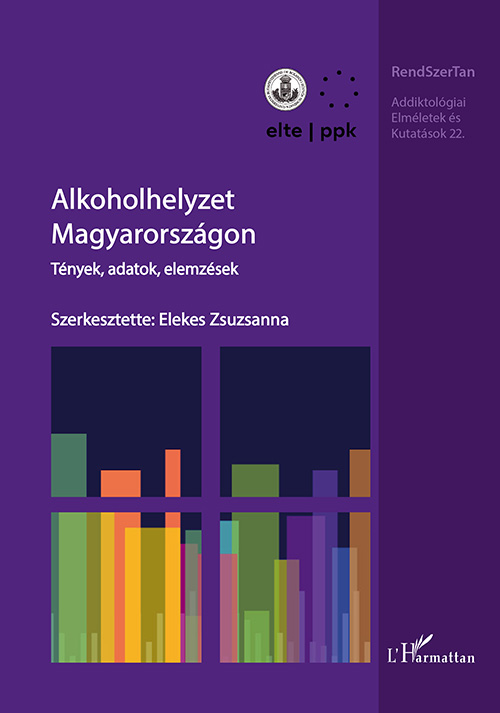
The volume of studies entitled ’Alcohol Situation in Hungary’ edited by Zsuzsanna Elekes has been published in the book series 'Addiction Research and Theories' of ELTE Faculty of Education and Psychology. Some of the Research Group’s colleagues contributed to the book.
Publication in the Journal of Substance Use
 Our Research Group (Petra Arnold, Øgoston Horváth, Zsuzsanna Elekes) has published an article titled "Adolescents’ alcohol use is decreasing in Europe but not in all of the countries. Why?" in the Journal of Substance Use. The paper aims to give explanations for alcohol use decline in Europe, while comparing the trend to the only country, Hungary, that shows an increase in alcohol use between 2003 and 2019. The article can be found
here.
Our Research Group (Petra Arnold, Øgoston Horváth, Zsuzsanna Elekes) has published an article titled "Adolescents’ alcohol use is decreasing in Europe but not in all of the countries. Why?" in the Journal of Substance Use. The paper aims to give explanations for alcohol use decline in Europe, while comparing the trend to the only country, Hungary, that shows an increase in alcohol use between 2003 and 2019. The article can be found
here.
The article on Parental mediation of adolescents’ technology use is out
 The article titled Parental mediation of adolescents’ technology use: Unequal parenting practices has been published in a special issue (Parenting and the State) of Intersections (Vol 8, No 3, 2022). The study was written by our research group member, Kitti Kutrovátz. The article focuses on parental mediation – its patterns, purpose, the intentions behind it, and related social inequalities – from the perspective of the idea of intensive parenting. The qualitative study contributes to understanding how theseintensive parenting skills constitute a digital cultural capital, and thereby how parenting may enhance digital inequality. The article is available for
download.
The article titled Parental mediation of adolescents’ technology use: Unequal parenting practices has been published in a special issue (Parenting and the State) of Intersections (Vol 8, No 3, 2022). The study was written by our research group member, Kitti Kutrovátz. The article focuses on parental mediation – its patterns, purpose, the intentions behind it, and related social inequalities – from the perspective of the idea of intensive parenting. The qualitative study contributes to understanding how theseintensive parenting skills constitute a digital cultural capital, and thereby how parenting may enhance digital inequality. The article is available for
download.
The book entitled ’Risk behaviours: an epidemiological perspective’ is out
’Risk behaviours: an epidemiological perspective’ edited by Zsuzsanna Elekes has been published in the book series of the Department
of Sociology and Social Policy, University of Debrecen.
Some of the Research Group’s colleagues contributed to the book. You can download the book
here.
The 13th National Conference of the Hungarian Association on Addictions

After a long break in the conference series, eventually, the 13th National Conference of the Hungarian Association on Addictions was held on the 13-15th October, 2022. Our Research Group gave a plenary presentation, organized a thematic section and gave individual presentations on the most recent results (Alcohol report, research studies in the counties of Baranya and Szabolcs). You can find the presentations of the conference here.
Our Research Group’s colleague is member of the ESPAD International Methodology Working Group

Our Research Group’s colleague Petra Arnold has become a member of the ESPAD International Methodology Working Group. The Working Group has been preparing a Guide that would help ESPAD countries do the next data collection in 2024 online. This is because all participating countries are now proposed to do the survey online instead of using the paper–and-pencil questionnaire as in previous years.
ESPAD Data Portal is out
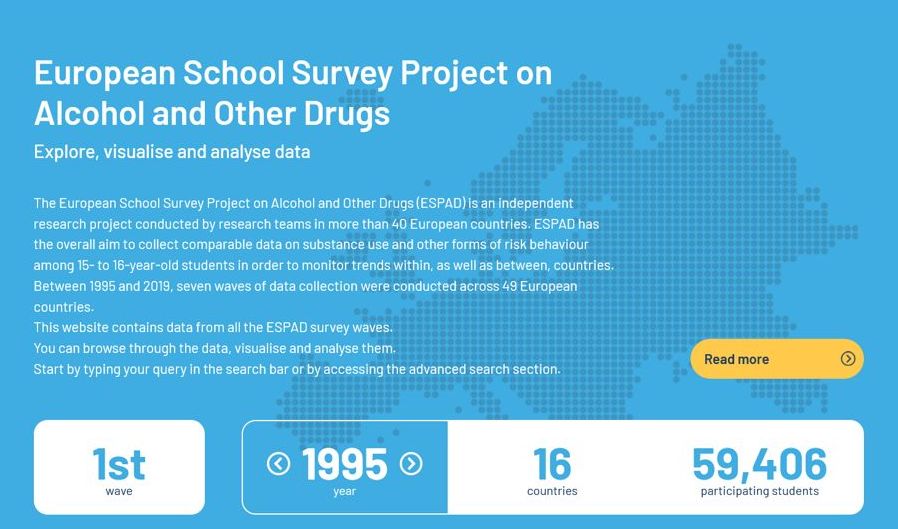
ESPAD (European School Survey Project on Alcohol and Other Drugs) is launching a new
data explorer tool,
allowing access to over 20 years of ESPAD data on substance use among 15-16-year-old students.
Developed by the National Research Council of Italy
(CNR), the new tool holds data collected between 1995 and 2019.
The purpose of the tool is to make ESPAD data available to a wide range of interested stakeholders,
from the general population, journalists and teachers to prevention experts and scientists.
More information: >>>
ESPAD Data Portal
Promotional video
ESPAD Assembly 2022
After a long time, finally, the ESPAD Assembly was held face-to-face in Lisbon. The discussion was about the preparation of the next ESPAD data collection wave in 2024.

Professional workshop on alcohol use in Hungary

A workshop called „Situation report on the alcohol use in Hungary” was held in the beginning of February. At the event,
members of the Research Group and the invited experts discussed emerging issues, questions and
results regarding the forthcoming publication
on alcohol use. As a result of the discussion,
new approaches were discovered
 along which the Research Group is going to revise the
chapters on alcohol consumption, the care system, alcohol related mortality, crime,
road traffic accidents and accidents at work. Hereby we would like to acknowledge
the support of the invited experts for their contribution to the forthcoming publication.
along which the Research Group is going to revise the
chapters on alcohol consumption, the care system, alcohol related mortality, crime,
road traffic accidents and accidents at work. Hereby we would like to acknowledge
the support of the invited experts for their contribution to the forthcoming publication.
Roundtable discussion on alternative tobacco products

Our research fellow, Petra Arnold has participated in a roundtable discussion on alternative tobacco products. Before the roundtable, a study had been presented which had focused on tobacco use with special regard to alternative tobacco products.
Research camp in Szabolcs-Szatmár-Bereg county

This year’s autumn research camp took place in Záhony district. With the help of the Research Group, university students carried out surveys during 5 days in 6 different towns (Eperjeske, Mándok, Tiszamogyorós, Tuzsér, Záhony, Zsurk) and interviewed/ asked locals about their free time activities, custom and risk behaviors.
Besides doing surveys, the students had several opportunities to start casual conversations with the locals and to become better acquainted with them Interviewers and interviewees often ended up having long talks in the local pub.
At the end of this intensive week we returned home with 166 surveys filled in and valuable experience.
We would like to acknowledge the support of the university students as well as the locals who supported us on the ground.
The pictures of
the Research Camp can be found here.
The 6th Rudolf Andorka Conference
The program of the 6th Rudolf Andorka Conference is out. The conference will be held on September 23, 2021 in Budapest. Research Group members Øgoston Horváth and Petra Arnold will be presenting at the conference.
The Hungarian ESPAD Trend Database is out!
We have merged data of the 7 collection waves (1995-2019) into a single Trend Database for the purpose of analysing them simultaneously.
More information on the database can be found
here >>>
If you are interested in our Trend Database, email us: info@devianciakutatas.hu
Reccy in Szabolcs-Szatmár-Bereg county (nr.2)

Following the reccy in June, members of the Research Group have visited Szabolcs-Szatmár-Bereg county, the districts of Záhony and Mátészalka, again.
The aim of our stay was to prepare for the upcoming research camp. To do so we visited mayors, social care workers, representatives of NGOs and individuals, such as teachers and priests, who definitely have an impact on the life of locals but whom we have not had the chance to meet.
We discussed the local conditions of the towns and villages of the area, the lifestyle and habits of the locals with special regard to alcohol and drug consumption. Also, we discussed practical questions which might help both the work of the Research Group and the future field work of the students (ex. informing the locals prior to the survey).
During the three days in the county, we gained valuable knowledge and experience. Our hosts made sure that they would help us while we carry out the survey in autumn.
Reccy in Szabolcs-Szatmár-Bereg county (nr.1)

To prepare for the research camp in autumn, members of the Research Group spent three days in Szabolcs-Szatmár-Bereg county. We went there to learn about the lifestyle, prospects, alcohol and drug consumption habits of the locals.
Our aim was to be familiar with the infrastructure of the area. Also, we wanted to inform representatives of the villages, towns and local institutions about the upcoming research. In order to do so, we had meetings with the mayors of three towns (Tuzsér, Mándok, Záhony) in the district of Záhony and with the head of the Social Care Center of Mándok region. Moreover, we visited Ópályi in the district of Mátészalka, where we met the coworkers of the Association for Happy Families and the mayor who gave us a tour around the town including the segregated areas.
During our stay we also wanted to gain an insight into the local care system. Therefore we visited the Addiction Treatment Department at Kálmán Sántha Special Hospital where the employees shared the stories of their patients with us (circumstances of their admission, substance use habits). After the meeting, the employees of the hospital showed us around the institute.
During those three days we gained relevant experience, so hereby we would like to acknowledge the support of all the experts and helpers who had contributed to our trip and helped us to learn more about the county and so to prepare for the upcoming research camp.
Presenting the latest ESPAD results at the Drug Coordination Forum in Budapest
Petra Arnold presented the latest ESPAD results at the assembly of KEF (Drug Coordination Forum), in Óbuda-Békásmegyer (the third district of Budapest). Following her presentation, Gergő Horváth, leader of the Hungarian National Drug Focal Point, gave a presentation about the latest trends of substance abuse in Hungary.
Expert meeting (nr.4) about the survey to be carried out in Szabolcs-Szatmár-Bereg county

The Research Group held online consultation with Dr. Ibolya Czibere, head of the Institute of Political Science and Sociology, University of Debrecen. Ms. Czibere provided information about local experts and helpers with whom we might do interviews and focus group interviews about the upcoming research camp. Ms. Czibere suggested a few potential research sites for the survey to be carried out in autumn, 2021.
Expert meeting (nr.3) about the survey to be carried out in Szabolcs-Szatmár-Bereg county

The Research Group hosted a meeting at which Mr. Béla Juhász, President of Lelkierő Association and co-worker of the University of Debrecen Center for Mental Health Equal Opportunities shared his valuable experience of substance use and the related health caresystem in the county. Mr. Juhász also suggested a few research sites and provided information on social care, church and NGO contact persons who might be able to help in the field research in autumn 2021.
Expert meeting (nr.2) about the survey to be carried out in Szabolcs-Szatmár-Bereg county

The Research Group held online consultation with Dr. Øgnes Erdélyi, Chief Physician of the Addiction Treatment Department at Kálmán Sántha Specialist Hospital. Ms. Erdélyi shared her valuable knowledge about alcohol and substance use habits in the county, the related health care-(system) and the work of NGO’s and churches. The Research Group might have the opportunity to visit the institution in Nagykálló in the summer and do interviews with those who are currently being looked after there.
Expert meeting (nr.1) about the survey to be carried out in Szabolcs-Szatmár-Bereg county

The Research Group held online consultation with András Berényi, head of the University of Debrecen Center for Mental Health Equal Opportunities. We had a discussion about the sociodemographic factors/characteristics and the infrastructure of Szabolcs-Szatmár-Bereg county. Mr. Berényi shared his knowledge about local projects and local experts who might contribute to the upcoming field research in autumn 2021.
Call for abstracts: conference in honour of Rudolf Andorka

The conference ‘Demography, structure of society and deviant behaviours’ to mark the anniversary of the 90th birthday of Rudolf Andorka, one of the most remarkable Hungarian sociologist, is being organized by KSH NKI (Hungarian Demographic Research Institute), Corvinus University of Budapest and TØRKI Social Research Institute. Abstracts are welcome in three topics: 1) demography 2) social stratification, inequality, poverty 3) deviant behaviours.
Planned date of the conference: September 23, 2021
Planned location of the conference: KSH NKI Budapest, Hungary
More info: >>>
Expert meeting with Økos Kassai-Farkas held on April

Økos Kassai-Farkas has decades of experience in substance misuse treatment, as he has been the leader of a number of hospital departments at Nyírő Gyula Hospital and the National Psychiatric and Addiction Institute, among others; departments assisting a huge number of clients. We had a discussion on the development of substance (alcohol) misuse treatment and he provided us with a ‘guide’ on treatment data analysis.
The COVID-19 International Student Well-Being Study is out

The COVID-19 International Student Well-Being Study has been published in Covinus Journal of Sociology and Social Policy (Vol 11, No 2, 2020). The study was written by the Research Group in cooperation with researchers from the University of Debrecen, Miskolc and Szeged. The article focuses on the background information of the COVID-19 international study conducted among university students. Besides our article, many interesting studies focusing on the social impact of COVID-19 have been published in that issue, which are available for download for free.
Expert meeting with Ildikó Ritter, Research Fellow of the National Institute of Criminology

On the 13th of January 2021, the Research Group hosted a meeting at which Ms Ildikó Ritter shared her valuable knowledge on alcohol-related crime statistics with special regards to traffic offenses. Ms. Ritter talked about the collection, registration and interpretation of crime data as well as the changes in certain definitions and legislation which have had a significant impact not only on the ways we analyse crime statistics today but also on the very definition of data.
The Research Group on Facebook

You can follow the Research Group on Facebook. We are going to share not only the news about the Research Group but also news of our research area. You can find the Research Group here.
ESPAD 2019 in the show ‘Drugs on Tuesday Evening’

On Tilos Radio (the first independent, not public service and non-profit radio station in Hungary) in the show ‘Drugs on Tuesday Evening’ Petra Arnold talks with Dániel Varga and Róbert Csák about the national and international ESPAD reports, results and trends published in November.
Expert meeting with Andrea Rácz and Judit Szécsi

On the 9th of December 2020, the Research Group hosted a meeting with two experts, Andrea Rácz and Judit Szécsi. The focus of the meeting was to get a better understanding on the background of child protection data related to addictive practices, especially alcohol consumption. The two experts shared their knowledge and experience about the child protection cases in which alcohol use plays a key role and about issues of the registration, analysis and interpretation of these cases.
Dissemination Workshop "Race against time"

he final dissemination workshop of the NKFIH research project ’Race against Time’ was organized as part of the ’Kutatók Éjszakája/Researchers’ Night event. The project aimed to explore parents’ and their teenaged ((between) 12-16 years old) children’s perception of parental time and parental mediation of digital technology use. The study examined (various topics, such as) how the time spent together by parents and their children has changed as a consequence of using the new digital technology tools, and how parents navigate their children in a world unknown to the parents themselves. Beáta Nagy was the leader of the research group, and one of our colleagues, Kitti Kutrovátz worked as a junior researcher in the project. At the workshop Kitti presented the first results of the qualitative study. She gave a presentation with the title of ’Intensive parenting – parents perspective on parental time and parental mediation of digital technology use’.
Expert meeting with György Dunay, research associate of SOTE Department of Forensic and Insurance Medicine

Participating in a video call, the Research Group was provided with information on mortality data, especially on the register of autopsies. On 25th November, 2020 György Dunay shared his valuable experience in the practice of identifying the possible causes of death. He talked about the case of autopsy in detail. Mr Dunay covered further issues such as the availability of alcohol-related mortality data and reliability (among other topics).
ESPAD 2019! The national and international reports are now available for download

The national and international reports on ESPAD (European School Survey Project on Alcohol and other Drugs) are now available for download.
The two studies present the results from the seventh wave of data collection of 2019 and give an overview of young people’s risk behaviours
and their background factors. The reports also present an overview of trends over the time period 1995-2019.
International report >>>
Video news release of the international study >>>
Presentations by the Research Group at the conference ‘Sociology at the Dawn of a Successful Century’

The research Group gave the following three presentations in the section „Health Problems and Risk Behaviours in the 21st century” at the conference ‘Sociology at the Dawn of a Successful Century’ organized by the Institute for Sociology of the Hungarian Academy of Sciences:
- Øgoston Horváth, Petra Arnold, Anna Sebők: Risk behaviours in the past 25 years – a study based on ESPAD data
- Nóra Bencsik, Anna Gelencsér, Kitti Kutrovátz, Miklós Hajdu: The associations between screen time and mental health among adolescents
- Petra Arnold, Zsuzsanna Elekes, Nóra Bencsik: University students’ risk behaviours and their background factors in the time of COVID-19. Preliminary results of an international COVID-19 study
Research Camp in Siklós district
In the beginning of October, nearly 30 students and the members of the Research Group travelled to Siklós district to start the 5 day-long Research Camp. During the five days, the participants visited several places, such as Alsószentmárton, Beremend, Márfa, Szava and Villány, where they conducted surveys asking locals about their life path, living conditions as well as about their alcohol and drug consumption. Besides doing surveys, there were many other occasions to examine the habits of the locals, for instance the Roma Day in Alsószentmárton, visiting bars in Szava, or searching for the so-called ‘bögrecsárda’ (the non-official bars). At the end of the intense week, we returned home with more than 200 surveys filled in – and with a wealth of experience. The pictures of the Research Camp can be found here.

Preliminary visit in Siklós district

At the end of August, the Research Group travelled to Baranya county to visit the six municipalities of the small sample survey (Alsószentmárton, Beremend, Márfa, Szava and Villány). The research group met with the mayors, the staff of the family care centres and key figures of the community. The purpose of the visit was to gain first-hand experience about the daily life of the locals and to inform them about the upcoming Research Camp.
Interviews and focus group in Baranya district
The Research Group did fieldwork in Pécs and Siklós district in July 2020. We did life path interviews with psychoactive substance users who are clients of INDIT (Hungarian drug rehabilitation organization). Also, we conducted a focus group survey of the colleagues of Máltai Szeretetszolgálat (Hungarian Charity Service of the Order of Malta) and Siklósi Szociális és Gyermekjóléti Szolgáltatási Központ (Centre for Social and Child Welfare Services).
International COVID research on alcohol coordinated by the Research Group
The pan-European survey resulted from a collaboration of about 22 scientists from multiple research institutes in Europe, led by Technische Universität Dresden (Germany) and Hospital Clíníc de Barcelona (Spain). The aim of the survey is to explore the effects of the COVID pandemic on alcohol use and other risk behaviours. In Hungary, the survey is coordinated by the Research Group. More information >>>
Student during the COVID-19 epidemic? Make yourself heard!
International survey among students of Corvinus

The Corvinus University of Budapest Institute of Communication and Sociology wants to discover the impact of the COVID-19 outbreak on student life. Therefore, Corvinus University has decided to participate in an international survey examining the effects of COVID-19 on student life, involving 27 countries. In Hungary, students of Corvinus University of Budapest as well as students of University of Debrecen and Szeged will fill in the questionnaire. At Corvinus University, coordinator of the international study will be the MTA-BCE Social Epidemiology Research Group.
Please take the time to consider helping us with this important research. Help our work by sharing your experience of COVID-19. Fill in the questionnaire to help us find out how you, a student of Corvinus have been affected during the pandemic. Your answers are valuable to us. You will contribute to our comparative study examining how students have been affected by the epidemic across the world.
More info about the international study can be found through the following link.
Thank you for your cooperation.
Expert meeting with Éva Keller, ex-Head of SOTE Department of Forensic and Insurance Medicine

Participating in another video call, the Research Group was provided with essential information on macro-statistical data. On 7th May 2020 Éva Keller shared years of her interesting experience with us. She talked about the availability of alcohol-related mortality data and about reliability issues among other topics.
Expert meeting with Károlyné Tokaji, head of the Health Statistics Department at the Hungarian Central Statistical Office (KSH)

On April 9, 2020, the Research Group held an online meeting (due to COVID-19 we could not hold a face to face meeting) with Károlyné Tokaji, who is responsible for the coordination of health data collection at KSH. All alcohol related data and questions on treatment, child protection, mortality, GPs’ report, consumption etc. were discussed. Károlyné Tokaji was very cooperative and supported the Research Group to move on in the research project.
Call for papers for section "Health Problems and Risk Behaviours in the 21st century”
We would like to encourage researchers to apply and present in section "Health Problems and Risk Behaviours in the 21st century” at the conference organized by the Institute for Sociology of the Hungarian Academy of Sciences. Papers are welcome which
a, present empirical data on health status, mortality, risk behaviours, general mental health, or
b, are searching for explanations for changes in recent years, or
c, the authors are open to discuss and compare their results with others, or
d, focus on theoretical issues providing a broader context for interpreting the changes.
Date: 11-12 June, 2020.
Location: Hungarian Academy of Social Sciences, 1097 Budapest, Tóth Kálmán u. 4., Hungary.
Participation fee: free
The Research Group’s section plan for the conference ‘Sociology at the Dawn of a Successful Century’ has been approved
Section plan with the title ’Health Problems and Risk Behaviours in the 21st century’ for the conference ‘Sociology at the Dawn of a Successful Century ‘ has been submitted by the Research Group. The conference is being organized by the Institute for Sociology of the Hungarian Academy of Sciences. The section plan has been approved. The Chair of the section will be Zsuzsa Elekes.
Expert meeting with István Murányi, Associate Professor at the University of Debrecen
On February 19, 2020, the Research Group met with István Murányi to prepare the study that will be conducted in Szabolcs-Szatmár-Bereg county in Hungary, in summer 2021. István gave information about the studies available examining the area. Also, he advised us on how (i.e. in which particular work phase) students from the Univeristy of Debrecen should be involved. István was very cooperative and supportive. Consulting him will be valuable for the Research Group.
Expert meeting with Lajos Bálint, Research Fellow at KSH NKI
On February 10, 2020, Lajos Bálint, expert in mortality, research fellow of the Hungarian Demographic Research Institute Lajosgave a lecture on alcohol-attributable mortality . Through a professional discussion he provided the Research Group an overview of trends of alcohol--attributable mortality in Hungary. The various methods of assessing alcohol-related mortality and data reliability were the main topics covered by our invited guest. The Research Group also received relevant recommendations on the analysis of the related macro data, which will help the Research Group’s work to progress.Presentation by Zsuzsa Elekes at the conference in honour of László Levendel
The conference ‘Treating a Country’ to mark the centenary of pulmonologist, addictologist László Levendel’s birth is being organized by Hungarian organization Liget Műhely Alapítvány. At the conference, Zsuzsa Elekes is going to give a presentation with the title ‘A Disadvantaged Problem’.
Location: Barabás Villa, Budapest
Date: March 18, 2020.
Location: Barabás Villa, Budapest XII. kerület, Városmajor u. 44., Hungary
Expert meeting with Judit Szécsi, Lecturer at ELTE TáTK
 On January 22, 2020, at a meeting with the Research Group,
Judit Szécsi, lecturer at ELTE TáTK (Eötvös Loránd University Institute of Social Studies), shared her experiences of the research camps from the last 15 years. Judit and her students have been researching extreme poverty in segregated areas in Hungary. In 2015 focus of their study was drug use. As the results of the study had been published in a Hungarian journal called “Esély”, Judit did not give a speech on the main findings, instead she chose to talk about the difficulties and experiences of the research camp. The Research Group was given insider tips on how to organize a research camp successfully. Judit shared a lot of useful, practical information with the Research Group,
which surely will be a great help in organizing and conducting the research camp of summer 2020.
On January 22, 2020, at a meeting with the Research Group,
Judit Szécsi, lecturer at ELTE TáTK (Eötvös Loránd University Institute of Social Studies), shared her experiences of the research camps from the last 15 years. Judit and her students have been researching extreme poverty in segregated areas in Hungary. In 2015 focus of their study was drug use. As the results of the study had been published in a Hungarian journal called “Esély”, Judit did not give a speech on the main findings, instead she chose to talk about the difficulties and experiences of the research camp. The Research Group was given insider tips on how to organize a research camp successfully. Judit shared a lot of useful, practical information with the Research Group,
which surely will be a great help in organizing and conducting the research camp of summer 2020.
Zsuzsa Elekes “Speaker of the semester”

At Corvinus University of Budapest, in the fall semester of 2019/2020, based on students' votes, our Research Group leader Zsuzsa Elekes got silver medal in the category of "speaker of the semester". We are proud of it! Thank you for the nomination and votes.
Presentation by Zsuzsa Elekes and Petra Arnold at the XII. National Conference of the Hungarian Association on Addictions

At the XII. National Conference of the Hungarian Association on Addictions, two members of the Research Group, Zsuzsa Elekes and Petra Arnold give a presentation on the preliminary results from ESPAD (European School Survey on Alcohol and Other Drugs).
Kitti Kutrovátz’s presentation at the "Race against Time" workshop

Kitti Kutrovátz gives the following presentations at the "Race against Time" workshop organized by the Centre
for Gender and Culture and the Institute of Sociology and Social Policy at Corvinus University of Budapest:
Nikolett Geszler, Kitti Kutrovátz:
The Concepts and Impact of Quality Time - The Relation between Parenting Time and Adolescent’s Subjective Well-Being and School Performance
Kitti Kutrovátz: Perceptions of Spending Time Together - Perspectives of Parents and Adolescents
Date: November 15, 2019, 2:00 pm - 5:00 pm
Location: Corvinus University of Budapest, Közraktár utca 4-6. C426. room, Hungary
Professional trip in Pécs, Hungary

October 28-29, 2019, the Research Group visited Pécs, in Hungary with the aim of preparing the regional research that will be conducted in spring and early summer. We would like to involve students from Corvinus University in the field work. The Research Group organized meetings with several organizations. The staff of the Department of Sociology University of Pécs (Márta Erdős, Katalin Füzér, Tamás Ragadics) provided in-depth insights into local research. Zita Dombrádi, a member of the INDIT Foundation, shared her experiences about the regional treatment over the past 20 years. Zsolt Máté presented the low-threshold service (called TÉR) provided by INDIT. The Research Group visited a village near Pécs, called Téseny, where the staff of the Hungarian Caritas told stories about the village's life, habits, etc. which was a great help in terms in preparing fieldwork and data collection.
Presentation by Kitti Kutrovátz at the annual conference of the Hungarian Sociological Association

At the annual conference of the Hungarian Sociological Association, Kitti Kutrovátz, member of the Research Group, presents the results of her research that has been conducted in the past years.
October 26, 2019, 9:00: Beáta Nagy - Kitti Kutrovátz: Adolescents’ Screen Time and Parental Mediation Strategies
Location: Kodolányi János University, Budapest XIII., Frangepán u. 50-56.
Meeting with the member of NAV (National Tax and Customs Administration)
The Research Group had a meeting with Økos Erdős, a member of NAV, October 16, 2019. Økos Erdős shared his experiences of unrecorded alcohol consumption (for example home-made pálinka (a type of Hungarian spirit), alcohol importation), which was very useful for the Research Group in surveys related to estimation of unrecorded alcohol consumption.
Establishment of MTA-BCE Social Epidemiology Research Group
MTA-BCE (Hungarian Academy of Sciences - Corvinus University of Budapest) Social Epidemiology Research Group was founded on 1 July 2019, and is lead by Zsuzsanna Elekes. The Research Group wishes to continue the tradition established by Hungarian sociologist Rudolf Andorka. The Research Group’s aim is to fill research gaps in order to reveal and understand the social patterns, characteristics, causes and interrelations of risk behaviours. More information about the Staff and about the Working packages .